



V4V’s Signature Intellectual Framework
Participatory Capacity Theory (PCT) is V4V’s foundational interdisciplinary framework.

Participatory Capacity Theory (PCT)
V4V emerges as a response to this failure.
Participatory Capacity Theory reframes integration as:
the development of independent institutional agency.
.
PCT argues that successful institutional participation depends not only on legal recognition or language acquisition, but on the development of stable representational, symbolic, narrative, and institutional interpretive capacities.
The theory proposes that displacement frequently disrupts:
symbolic continuity,
educational formation,
institutional familiarity,
narrative organization,
and participatory confidence.
As a result, integration systems that focus exclusively on language instruction often fail to address the deeper representational and institutional barriers shaping participation.
Participatory Capacity Theory reframes integration as:
the development of independent institutional agency.
Core Proposition:
Language Alone Does Not Produce Participation;
Participation requires:
symbolic stabilization,
representational continuity,
institutional interpretation,
action translation,
narrative organization,
and participatory confidence.
Without these foundations:
forms cannot be interpreted,
institutional expectations remain opaque,
instructions cannot reliably become action,
and participation remains externally mediated.
OUR TWO PHASE MODELS
Phase 1 — Representational Literacy Stabilization (RLS):
Building Symbolic Stability Before Institutional Participation
RLS establishes foundational symbolic cognition through the stabilization of oral language into written representation within the learner’s primary language.
This phase is not merely about literacy.
It is about epistemic stabilization.
The program develops:
symbolic recognition,
representational continuity,
visual-language association,
narrative sequencing,
procedural interpretation,
and foundational institutional comprehension.
Four Sequential Modules
Module 1 — Symbol Emergence
letter recognition
tracing systems
oral-symbol association
sound stabilization
Module 2 — Word Formation and Reproduction
environmental vocabulary
repetition systems
identity language
community vocabulary
Module 3 — Sentence Formation
narrative organization
event sequencing
daily-life representation
action structuring
Module 4 — Functional Institutional Readiness
appointments
dates and schedules
names and addresses
forms and instructions
institutional symbols
Phase 2 — Structured Language Transfer (SLT)
Transferring Stabilized Cognition into Institutional Participation
SLT differs fundamentally from conventional ESL or FSL programming.
Rather than beginning with abstract grammar systems, SLT begins with:
institutional meaning,
functional participation,
procedural comprehension,
and action translation.
The objective is not merely conversational familiarity.
The objective is independent institutional navigation.
Core Instructional Areas
Institutional Navigation Literacy
healthcare systems
transportation systems
school systems
government communication
procedural interpretation
Functional Communication Systems
asking questions
clarification strategies
reporting problems
requesting assistance
understanding responses
Narrative and Identity Structuring
personal storytelling
migration narratives
contextual communication
self-description
Workplace Readiness Language
task interpretation
time systems
safety language
attendance reporting
instruction comprehension
Civic Participation Foundations
rights and responsibilities
institutional trust formation
community participation
public system navigation

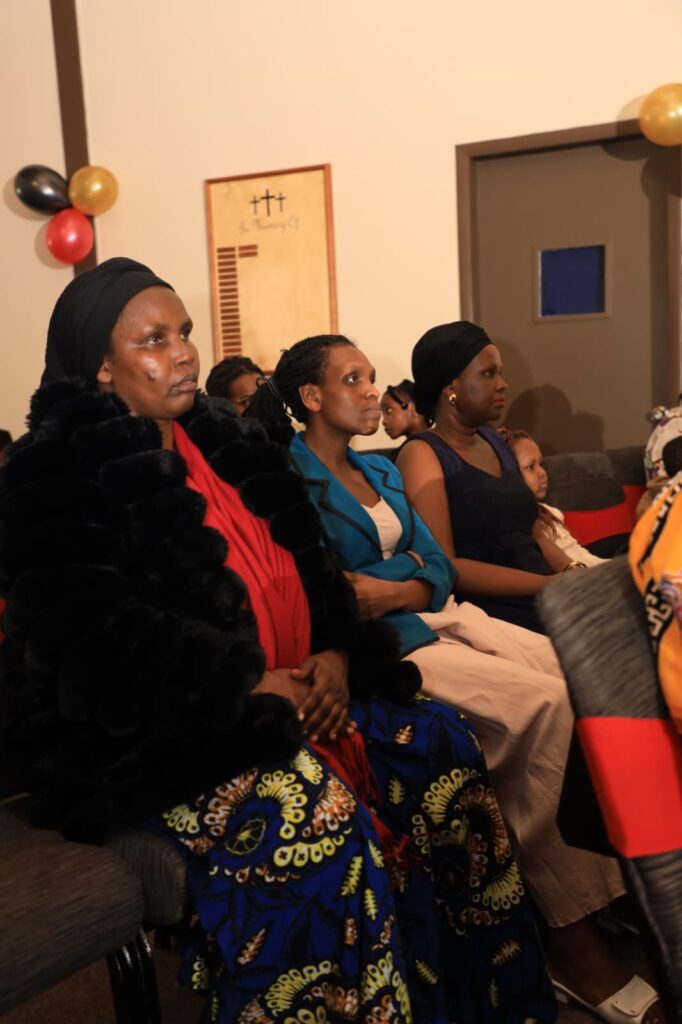
Building a Transferable Global Integration Architecture
PARTICIPATORY CAPACITY STANDARD (PCS)
Measuring Participation Beyond Language Benchmarks
The Participatory Capacity Standard (PCS) is V4V’s proprietary evaluative framework.
PCS measures whether individuals can:
interpret systems,
organize meaning,
navigate institutions,
and translate information into independent action.
Unlike conventional language benchmarks alone, PCS evaluates participatory functionality.
Measurement Focus:
Symbol recognition and reproduction,
Event sequencing and coherence,
Procedural understanding
Converting instruction into action,
Reduced intermediary dependence,
Institutional engagement willingness
Transfer into English/French systems
.
The model is designed for application among: Swahili,Kinyarwanda, Lingala-speaking populations, Arabic-speaking populations, Somali-speaking populations, Dari-speaking populations, Rohingya communities, oral-language dominant learners, and displacement-affected populations globally. The V4V framework is structured for replication across: refugee-serving organizations, settlement agencies, educational systems, faith communities, humanitarian institutions, and international integration initiatives.
Foundational Principles Of The V4V Participatory Capacity Framework
- 1. Human Worth Precedes Institutional Recognition
V4V Begins From The Conviction That Human Dignity Is Not Granted By States, Institutions, Documentation, Or Legal Status. Refugees, Asylum Seekers, And Displaced Persons Do Not Become Human Through Recognition; They Possess Inherent Moral Worth Prior To Recognition.
- 2. Protection Without Participation Produces Suspended Humanity
V4V Argues That Contemporary Refugee Systems Often Achieve Biological Survival While Simultaneously Interrupting Participatory Development. This Produces What V4V Calls Suspended Humanity — A Condition In Which Individuals Exist Inside Systems Without Fully Functioning Within Them. A Person Can Be Safe Yet Structurally Excluded From Meaningful Social Existence.
- 3. Integration Is Participatory Formation, Not Assimilation
V4V Rejects Assimilationist Models Of Integration. The Goal Of Integration Is Not Cultural Erasure Or Behavioral Conformity. The Goal Is The Development Of Independent Participatory Capacity Within Institutional Environments. Participation Is The Central Measure Of Integration. The Framework Therefore Defines Successful Integration As: The Restoration Of Independent Institutional Agency.
- 4. Language Alone Does Not Produce Participation
Conventional Integration Systems Frequently Treat Language Acquisition As The Primary Gateway To Inclusion. V4V Argues This Is Incomplete. Many Displaced Individuals Encounter Difficulties That Are Not Purely Linguistic, But Representational And Institutional. Language Functions Effectively Only When These Foundational Capacities Exist.


The Three Pillars of Justice
Operationalizing Law With Soul
The framework translates justice into three measurable capacities:
● Voice - capacity to communicate
● Agency - capacity to act independently
● Belonging - capacity to participate and be recognized
Shift:
From formal rights → to usable rights
Standard of Legitimacy:
Law is legitimate only when individuals can function within it.

- From Theory to System
An Integrated Framework
Law With Soul operates as part of a broader system:
1. Law With Soul → Defines justice
2. Theology From Below → Defines perspective
3. V4V (Voice for the Voiceless) → Operationalizes justice
Together, they form a continuous cycle:
Theory → Practice → Experience → Data → Insight → Refined Theory
This makes justice:
Observable,
Measurable,
Testable,
Scalable.
- The Framework in One Statement
Law is legitimate only when individuals can participate in the systems that govern them.
+1 (780) 937-6435