img

V4V LAW

From protection → to moral repair

Restoring Voice, Agency and Justice through participatory capacity Theory (pct).

V4V Argues That Contemporary Refugee Systems Often Achieve Biological Survival While Simultaneously Interrupting Participatory Development. Individuals Exist Inside Systems Without Fully Functioning Within Them. V4V Exists To Restore The Conditions Necessary For Human Flourishing.
Monthly Visitors
0 K+
Countries Worldwide
0 +
Volunteers Needed
0 +
Explore the Framework

Understand how our model redefines justice and repair.

Read Our Research

Access evidence, insights, and field-based findings.

Partner With Us

Collaborate to scale impact and drive systemic change.

Core Premise

The Structural Nature of Exclusion

Structural Exclusion Occurs When Systems Are Built Upon Hidden Assumptions About Human Formation. Modern Institutions Often Assume That Individuals Already Possess: Stable Literacy Formation Familiarity With Bureaucratic Systems Institutional Confidence Procedural Interpretation Skills Long-Term Educational Continuity Documentation Experience Symbolic Navigation Capacity Independent Decision-Making Experience Within Formal Systems But Many Displaced People Have Lived Under Conditions Where These Capacities Were Interrupted, Delayed, Or Never Structurally Developed. This Means Individuals May Be: Legally Included Yet Functionally Excluded Present Within Institutions Yet Unable To Operate Inside Them Recognized By Systems Yet Unable To Interpret Them Exclusion Therefore Becomes Embedded Within The Structure Of Participation Itself.

The Measure Of A Humane Society Is Not Whether People Survive Inside Its Institutions. The Measure Is Whether They Can Fully Participate Within Them. :
● Voice ● Agency ● Participation ● LAW WITH SOUL

What We Do

V4V Law develops and implements integrated frameworks that move beyond survival-based approaches toward systems that enable participation.

Who We Are

Who We Are & Why We Exist

Across Refugee And Newcomer Systems, Millions Of People Are Legally Recognized Yet Functionally Excluded From Meaningful Participation Within The Institutions That Govern Their Lives. They May Be: Protected Resettled Documented Enrolled In Services Yet Still Unable To: Navigate Systems Independently Interpret Institutional Structures Translate Information Into Action Participate Confidently In Public Life V4V Exists To Address This Structural Gap. .

Exclusion Is Understood Structurally: Refugees Stop Being Seen As Problems To Manage And Begin Being Recognized As Participants Whose Capacities Were Systematically Interrupted

Why We Exist

Current systems stop at protection.
They provide legal status, humanitarian aid, and administrative inclusion, but fail to restore the conditions necessary for individuals to act within those systems.
The result is a predictable pattern:
Dependency instead of independence, Access without usability, Inclusion without participation
V4V Exists To Rebuild The Foundational Capacities Necessary For Human Participation. Because Justice Requires More Than Protection. Justice Requires The Restoration Of: Voice Agency Participation Dignity Human Capability

Our Approach

Driving Real Impact

Our Approach

Reimagining Integration Through Participatory Capacity Formation V4V Reframes Integration Not As Assimilation Into Systems, But As The Development Of Independent Participatory Agency Within Them. Our Approach Is Built Upon Participatory Capacity Theory (PCT), Which Argues That Successful Participation Depends Not Only On Language Acquisition, But On The Development Of: Symbolic Stabilization Representational Continuity Institutional Interpretation Narrative Organization Procedural Understanding Participatory Confidence The Framework Recognizes That Many Refugees Encounter Institutional Systems Without Having First Developed The Foundational Participatory Infrastructure Necessary To Operate Within Them Independently.

Through our programs and research, we enable individuals to rebuild confidence, engage with institutions, and actively contribute to the systems that shape their lives - creating lasting, generational impact.

Programs in Action

we focus on Building Participation Across The Displacement Continuum. V4V Operates Across Both: Pre-Arrival Refugee Contexts And Post-Arrival Resettlement Contexts.
for pre-arrivals, The Goal Is To Begin Building Participatory Infrastructure Before Resettlement Occurs. and for post-arrivals, The Goal Is Not Mere Adjustment To Systems. The Goal Is Independent Participation Within Them.
It focuses on:
1. Representational Literacy Stabilization (RLS)
2. Structured Language Transfer (SLT)
3. Participatory Capacity Standard (PCS)
Our programs translate ideas into measurable outcomes focused on building the foundations necessary for voice activation, agency, and participation.

A Global Perspective

V4V Argues That The Future Of Integration Requires A New Global Paradigm. The Central Global Question Is Not Simply: How Do We Protect People? The Deeper Question Is: How Do We Restore Human Participation After Displacement?
Our Framework Is Designed For Adaptation Across: Refugee Camps, Settlement Agencies, Educational Systems, Faith Communities, Humanitarian Organizations, Public Institutions and Global Integration Initiatives. The Model Is Structured For Diverse Linguistic And Cultural Contexts Including: Swahili-Speaking Communities, Kinyarwanda-Speaking Populations, Lingala-Speaking Communities, Somali Communities, Arabic-Speaking Populations, Dari-Speaking Communities, Rohingya Communities, and Oral-Language Dominant Learners Globally The Goal Is Not Cultural Uniformity. The Goal Is Participatory Accessibility Across Human Difference.

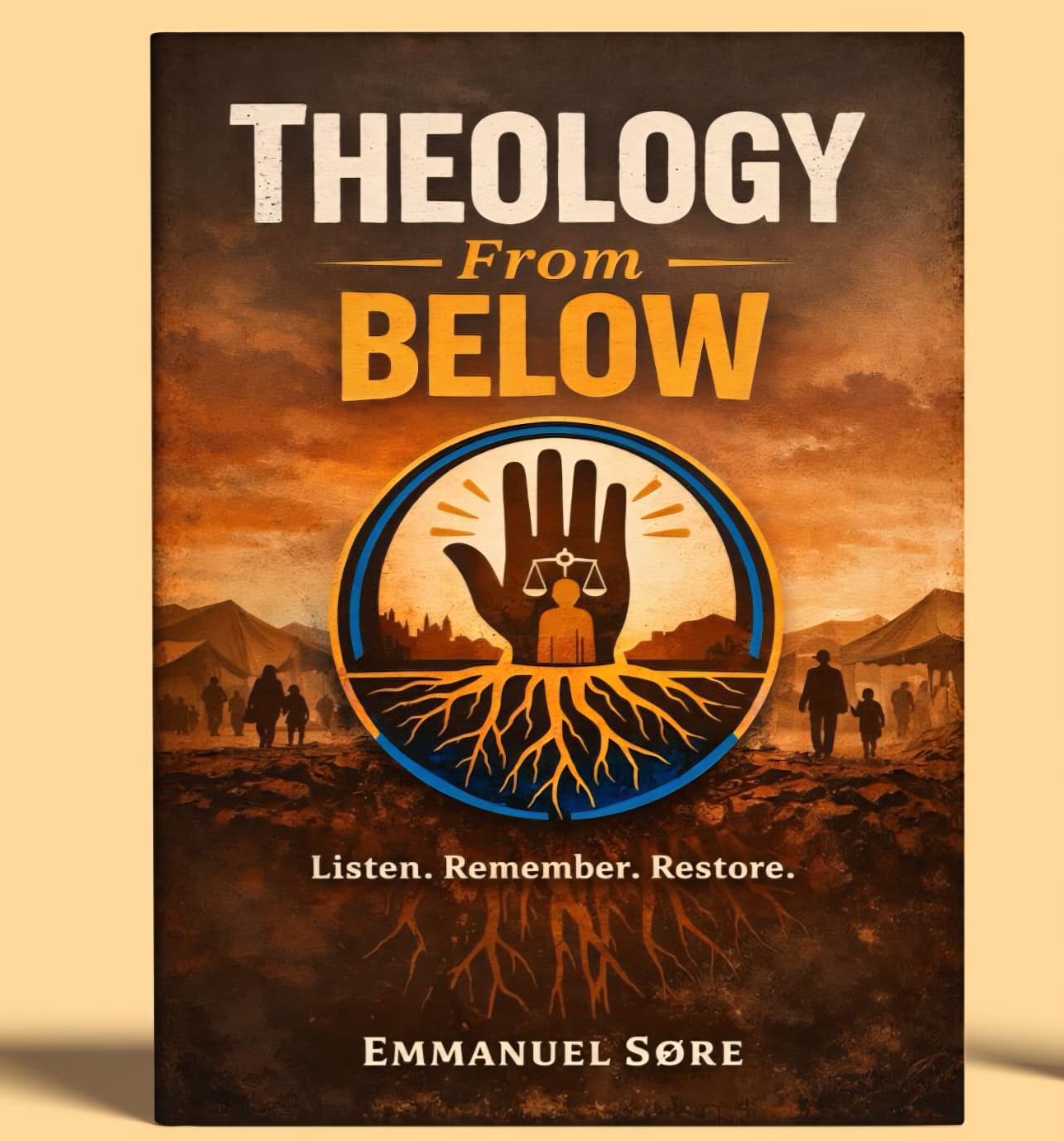
THEOLOGY FROM BELOW (ENGLISH)

Refuge, Memory, and the Moral Failure of Permanent Exile

THÉOLOGIE D’EN BAS (FRANCE)

Le droit avec une âme et l’imagination morale des Peuples déplacés