



Programs
Restoring Participation Across the Displacement Continuum
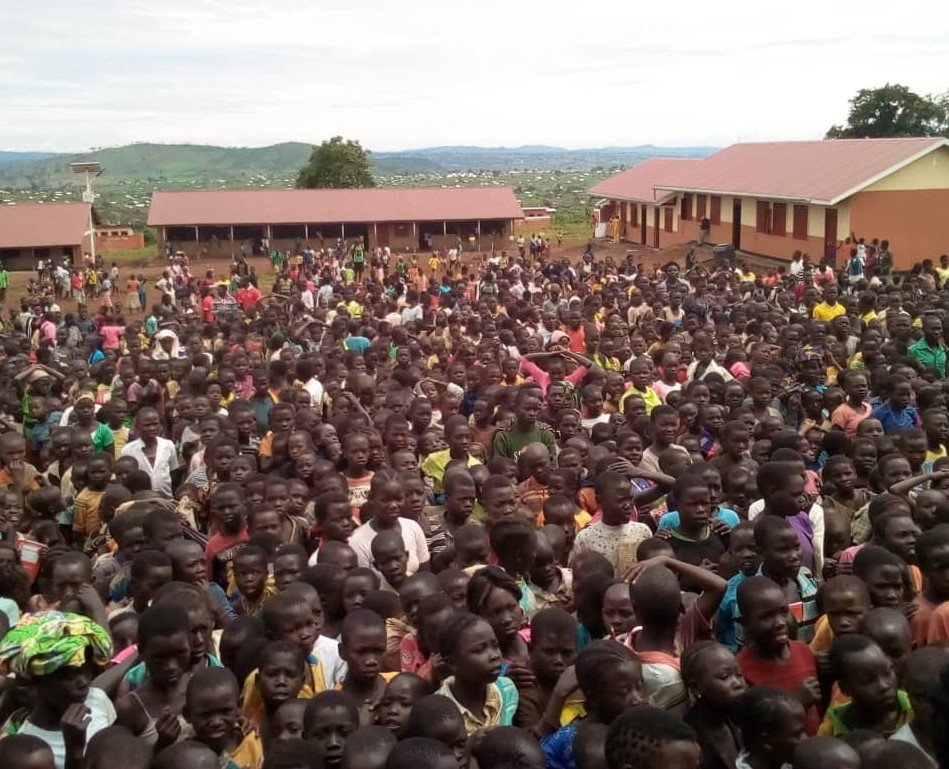
V4V - Voice for the Voiceless
V4V (Voice for the Voiceless) is a structured, multi-stage program designed to restore participatory capacity among displaced and marginalized populations.
It addresses a specific and measurable gap:
Individuals are required to function within systems, healthcare, education, employment, but are not equipped with the tools needed to do so.
V4V intervenes by building the foundational capacities required for participation:
1. Communication
2. System navigation
3. Independent action
The program transforms legal inclusion into functional participation.
Program Objective
The objective of V4V is to restore three core capacities:
1. Voice -
The ability to communicate effectively within institutions.
2. Agency -
The ability to act independently and make decisions.
3. Belonging -
The ability to participate meaningfully in society and systems.
These are treated not as abstract values, but as practical, measurable outcomes.
- Operational Logic
V4V follows a clear and testable sequence:
Restore language → Restore access → Restore agency → Enable participation
Each stage builds on the previous one, ensuring that participation is not assumed, but constructed.


Program Structure
- 1. Pre-Arrival (Refugee Contexts)
Building Capacity Before Resettlement
This stage focuses on early preparation within refugee or displacement settings.
It introduces foundational skills before individuals encounter complex institutional systems.
Core Components:
1. Functional language development
2. Institutional familiarization
3. Simulation-based learning environments
4. Bilingual, comprehension-based instruction
Function:
To reduce post-arrival exclusion by establishing the minimum conditions required for participation.
- 2. Post-Arrival (Resettlement Contexts)
Converting Inclusion into Participation
This stage focuses on real-world application within host communities.
Participants engage directly with systems using guided, contextualized learning.
Core Components:
1. Real-world language application
2. Institutional navigation training
3. Family-centered learning structures
4. Direct interaction with services and systems
Outcome:
Participants transition from dependence on intermediaries to independent system engagement.
Agency Development
- From Passive Inclusion to Active Participation
A core focus of the program is the development of agency. Participants are supported to move from: Receiving services → to navigating systems Being represented → to self-advocating Following processes → to making decisions Key Areas: Self-advocacy Institutional confidence Independent interaction Community engagement
- Delivery Model
V4V is designed for implementation across multiple environments: Refugee camps Urban displacement settings Government integration programs Community and educational institutions Delivery Approach: Trained bilingual facilitators Modular learning systems Context-specific adaptation Integration with existing structures This allows the program to scale while remaining locally relevant.
- Evaluation Framework
Measuring Participation as Impact
V4V measures outcomes across three dimensions:
1. Voice -
Ability to communicate within institutions
2. Agency -
Ability to navigate systems independently
3. Belonging -
Level of active participation in society
Result:
Impact is assessed based on what individuals can do, not what systems provide.

Expected Outcomes
Participants who complete the program demonstrate:
1. Functional communication within institutions
2. Independent navigation of systems
3. Reduced reliance on intermediaries
4. Increased access to employment and education
5. Active engagement in community and civic life
- Strategic Value
V4V operates across three levels:
1. Preventative - builds capacity before exclusion occurs
2. Corrective - addresses existing participation barriers
3. Transformative - shifts how systems approach integration
By targeting foundational barriers such as language and access, the program resolves multiple systemic challenges simultaneously.

Program Conclusion
- Participation is not automatic. It must be built.
V4V demonstrates that when individuals are equipped with the right capacities, exclusion can be interrupted and systems can function as intended.
+1 (780) 937-6435